Can Sagging floors Collapse?
Can Sagging Floors Collapse?
It's a question many Florida homeowners ask when they first notice a dip or soft spot in their floor: Is this dangerous? Could it actually collapse?
The honest answer is yes — in severe cases, sagging floors can fail completely. But the more important point is that structural deterioration gives warning signs long before a collapse occurs. Knowing what to look for can protect your family and your home.
How Floor Collapse Happens
Floors don't typically collapse without warning. The process is gradual, driven by the progressive failure of structural components in the crawlspace beneath your home.
Stage 1: Initial Weakening
Wood components — joists, beams, posts, and subfloor — begin to deteriorate due to moisture, insect damage, or age. The floor may feel slightly soft or springy but shows no visible sag.
Stage 2: Visible Sagging
As structural members weaken further, the floor begins to visibly drop. You may notice a dip in one area, sloping toward a wall, or a soft spot that gives slightly underfoot.
Stage 3: Accelerated Deterioration
Without repair, the weakened components continue to fail. Neighboring joists or beams take on additional load and begin to stress. The sag becomes more pronounced.
Stage 4: Structural Failure
In extreme cases — particularly where wood rot or insect damage has gone unaddressed for years — structural members can fail entirely, causing a section of floor to drop or collapse.
Warning Signs That a Floor Is at Risk
Take these signs seriously and schedule an inspection immediately:
A floor that visibly drops more than one inch in a short span
Soft spots that feel like the floor could give way underfoot
Cracking or popping sounds when walking across the floor
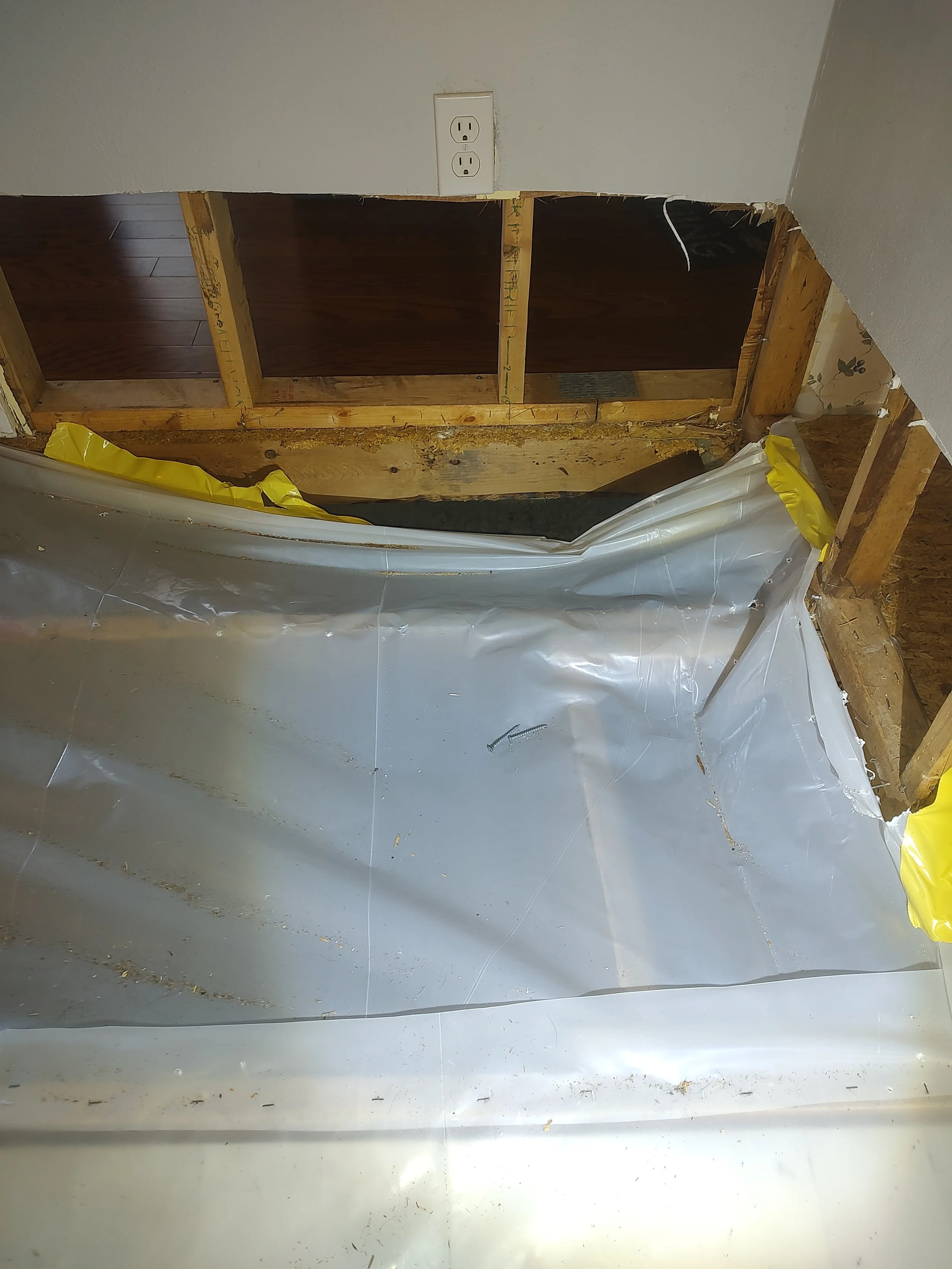
Visible damage to joists or beams when viewed from the crawlspace
Doors or windows that have suddenly become very difficult to open or close
What Increases the Risk of Floor Collapse?
Certain conditions accelerate structural deterioration and increase the risk of failure:
Advanced wood rot — severely decayed wood loses nearly all structural strength
Termite damage — termites hollow out wood from the inside, leaving it structurally useless
Failed support posts — a post that has completely failed transfers its load to adjacent members, which may also be compromised
Long-term neglect — the longer damage goes unrepaired, the greater the risk
How to Prevent Floor Collapse
The most effective way to prevent floor collapse is early intervention. A licensed crawlspace contractor can identify failing components before they reach a critical failure.
Related Articles
Can Floor Joists Be Repaired?
Floor Joist Sistering Explained
Signs of Rotten Floor Joists
Floor Joist Repair Cost Factors
Florida Crawlspace Repair | A Division of Laielli Construction 📞 850-375-4285 📧 tyler@laielliconstruction.com 🔗 Schedule Your Free Inspection
Financing available — ask us for details.