Floor Joist Repair
How Floor Joists Become Damaged | Florida Crawlspace Repair
Floor joists are the backbone of your home's floor system. These horizontal structural members run beneath your subfloor and carry the weight of everything above — furniture, appliances, and the people who live there. When they fail, your floors fail with them.
In Florida, floor joists face a unique set of challenges that accelerate deterioration. Understanding how damage occurs is the first step toward protecting your home.
The Most Common Causes of Floor Joist Damage Moisture and Wood Rot
Florida's humidity creates ideal conditions for wood deterioration. When moisture levels in a crawlspace remain elevated over time, wood joists absorb that moisture and begin to soften. Over months and years, this leads to wood rot — a condition where the cellular structure of the wood breaks down and loses its load-bearing capacity.
Termite and Insect Damage
Florida is one of the most termite-active states in the country. Subterranean termites tunnel through wood joists from the inside out, leaving a hollow shell that looks intact from the outside but has lost nearly all structural strength. By the time termite damage is visible, significant deterioration has often already occurred.
Age and Natural Deterioration
Wood joists in older Florida homes — particularly those built before the 1980s — may simply be at the end of their service life. Decades of load-bearing stress, seasonal movement, and environmental exposure cause wood to weaken over time.
Improper Modifications
Homeowners or previous contractors sometimes cut, notch, or drill through floor joists to run plumbing or electrical lines. When these modifications are made incorrectly, they reduce the structural capacity of the joist and create a weak point.
Overloading
Joists are engineered to carry a specific load. Heavy appliances, water-filled fixtures, or structural changes that concentrate weight in one area can cause joists to deflect or crack over time.
Signs Your Floor Joists May Be Damaged
Floors that sag, dip, or feel uneven
Soft or spongy spots when walking
Floors that bounce or flex noticeably
Creaking or cracking sounds underfoot
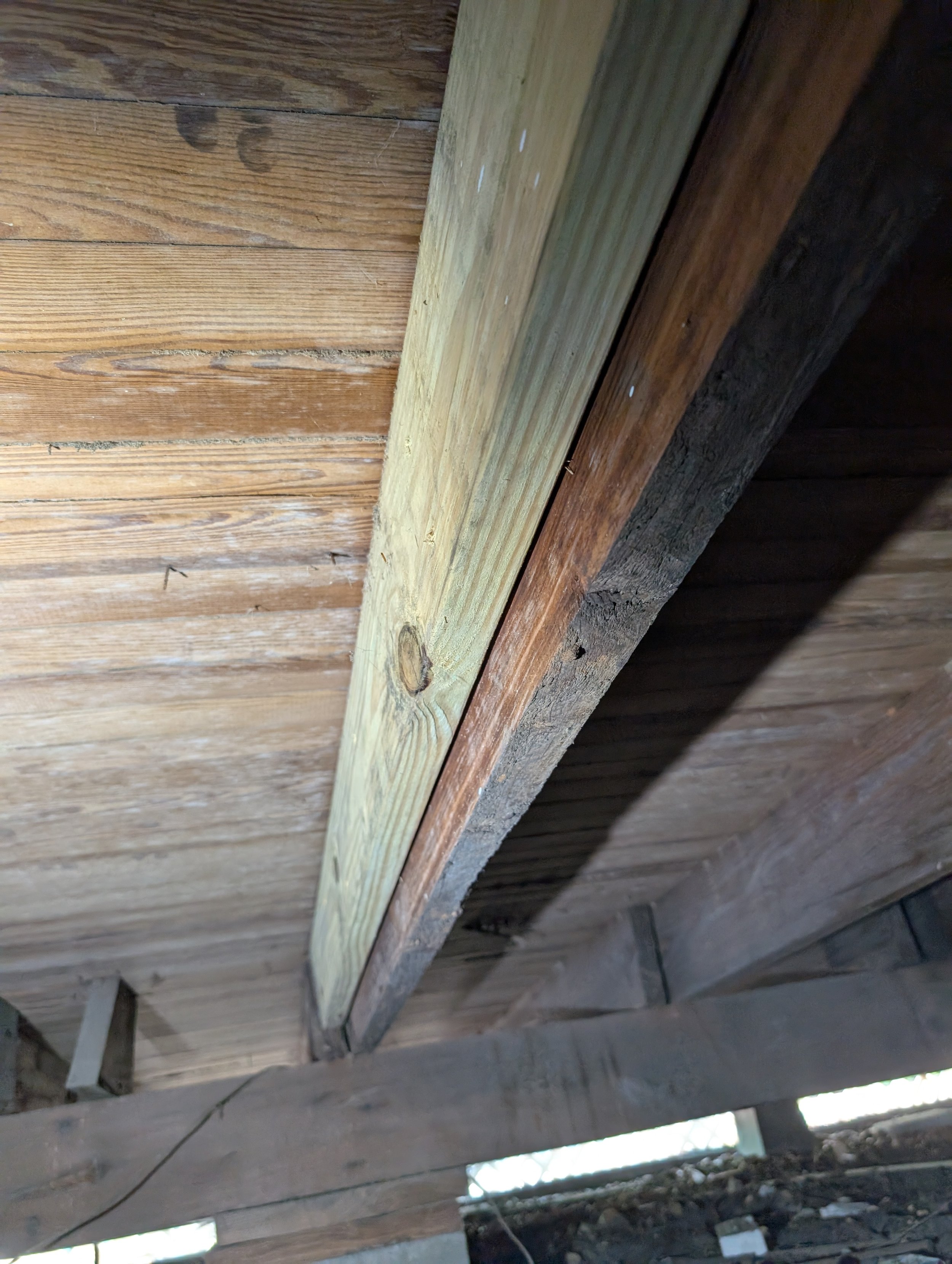
Visible deterioration when viewed from the crawlspace
What Happens If Damaged Joists Are Not Repaired?
Damaged joists do not recover on their own. As they weaken further, the load they carry transfers to adjacent joists, which then begin to stress and fail. This progressive failure can lead to significant floor deflection and, in severe cases, structural collapse.
Frequently Asked Questions
Can I see floor joist damage from inside my home? Usually not. Joists are hidden beneath the subfloor and above the crawlspace. A professional inspection from inside the crawlspace is the most reliable way to assess joist condition.
How long do floor joists last? With proper conditions, wood joists can last the life of the home. In Florida's humid climate, however, deterioration can begin within decades without proper maintenance and monitoring.
Is floor joist damage covered by homeowner's insurance? Coverage depends on the cause. Sudden damage from a covered event may be eligible, but gradual deterioration is typically excluded. Check with your insurance provider.
Related Articles
Can Floor Joists Be Repaired?
Signs of Rotten Floor Joists
Floor Joist Sistering Explained
Why Are My Floors Sagging?
Florida Crawlspace Repair | A Division of Laielli Construction 📞 850-375-4285 📧 tyler@laielliconstruction.com 🔗 Schedule Your Free Inspection
Financing available — ask us for details.