

Sagging floors
Why Are My Floors Sagging? | Florida Crawlspace Repair |
If you've noticed your floors dipping, sloping, or feeling uneven underfoot, you're not alone. Sagging floors are one of the most common structural complaints from Florida homeowners — and one of the most important to address early.
Sagging floors are rarely a cosmetic issue. In most cases, they signal a problem with the structural system beneath your home — inside the crawlspace.
What Causes Floors to Sag?
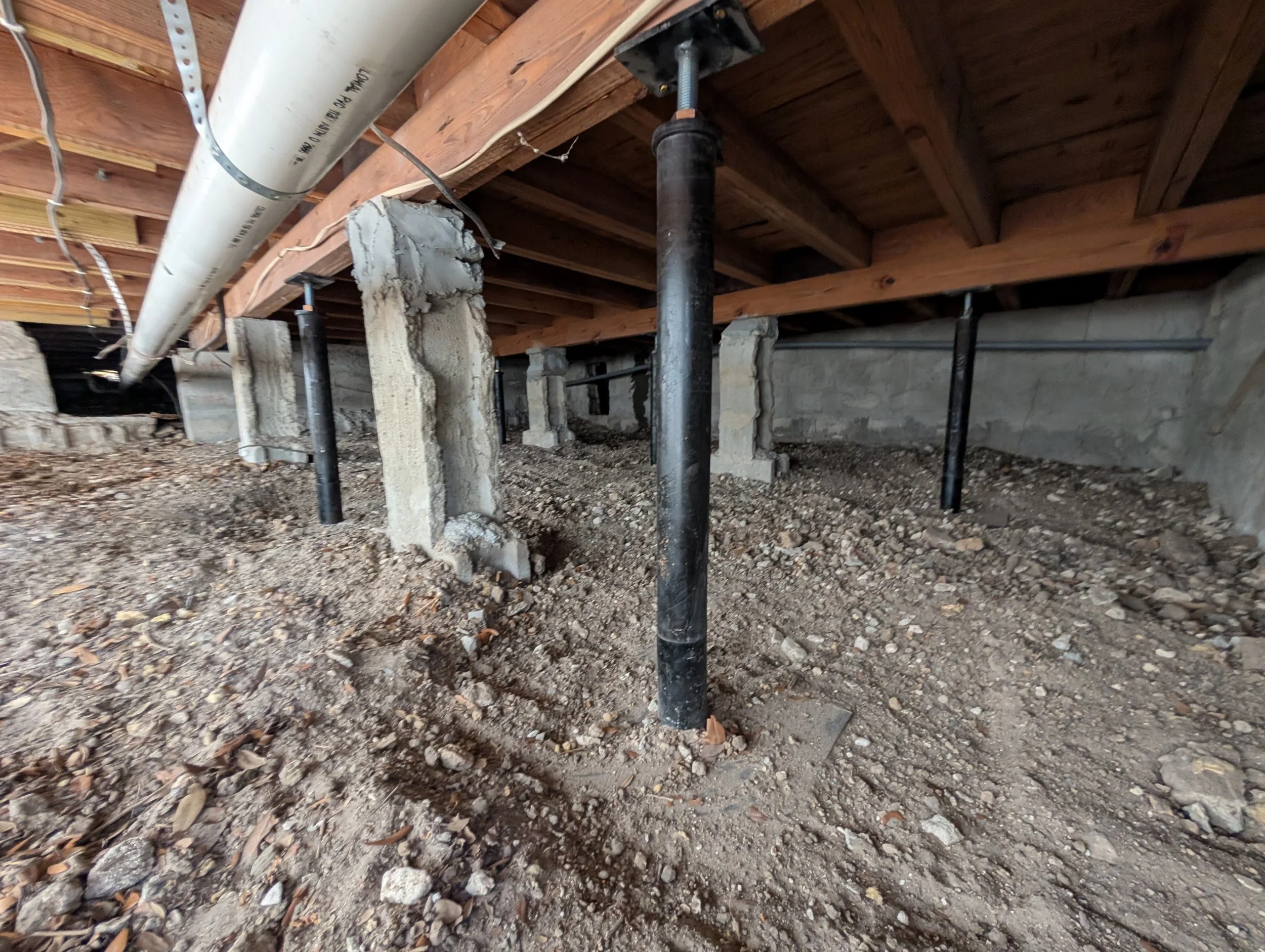
Floors sag when the structural components beneath them weaken or shift. Your floor is supported by a system of joists, beams, and posts inside the crawlspace. When any part of that system fails, the floor above begins to drop.
Damaged or Rotten Floor Joists
Floor joists are the horizontal boards that run beneath your subfloor. In Florida's humid climate, wood joists are vulnerable to moisture-related deterioration and insect damage. When joists weaken, they can no longer hold the weight of the floor above.
Failing Support Posts
Crawlspace support posts hold up the main beams that carry your floor. If a post sinks, shifts, or deteriorates, the beam it supports drops — and so does your floor.
Deteriorated Beams
Main support beams span the length of your crawlspace and carry the load of your entire floor system. When a beam rots or cracks, the floor above it will begin to sag noticeably.
Subfloor Damage
The subfloor is the layer of material directly beneath your finished flooring. Water intrusion, age, and wood rot can cause the subfloor to soften and sag between joists.
Is a Sagging Floor Dangerous?
A sagging floor should never be ignored. While a slight dip may seem minor, it often indicates progressive structural damage. Left unrepaired, sagging floors can:
Worsen over time as more weight stresses weakened components
Create trip hazards for your family
Lead to more extensive and costly repairs
Affect the resale value of your home
How Do You Fix a Sagging Floor?
The right repair depends on what's causing the sag. A licensed crawlspace contractor will inspect the area beneath your home to identify the source of the problem. Common repairs include:
Floor joist sistering — reinforcing damaged joists with new lumber
Beam replacement — removing and replacing deteriorated support beams
Support post installation — adding or replacing posts to restore proper support
Subfloor repair — replacing damaged subfloor panels
Frequently Asked Questions
How do I know if my sagging floor is a structural problem? If the sag is localized, worsening over time, or accompanied by bouncy or soft spots, it is likely structural. A crawlspace inspection will confirm the cause.
Can I fix a sagging floor myself?Structural repairs beneath a home require professional assessment and licensed contractors. Improper repairs can make the problem worse or create safety hazards.
How long does it take to fix a sagging floor? Most sagging floor repairs are completed in one to three days depending on the extent of the damage.
Will my homeowner's insurance cover sagging floors? Coverage depends on your policy and the cause of damage. Gradual deterioration is typically not covered, but damage from sudden events may be. Contact your insurance provider for details.
Does fixing a sagging floor require permits? Structural repairs in Florida often require permits. A licensed contractor will handle the permitting process for you.
Related Articles
What Causes Uneven Floors?
Signs Your Floor Joists Are Failing
How Crawlspace Repairs Fix Sagging Floors
What Happens During a Crawlspace Inspection?
Schedule Your Free Crawlspace Inspection
If your floors are sagging, don't wait. The longer structural damage goes unrepaired, the more extensive — and expensive — it becomes.
Florida Crawlspace Repair | A Division of Laielli Construction 📞 850-375-4285 📧 tyler@laielliconstruction.com 🔗 Schedule Your Free Inspection
Financing available — ask us for details.