Structural Settlement
Signs Your Home Is Settling
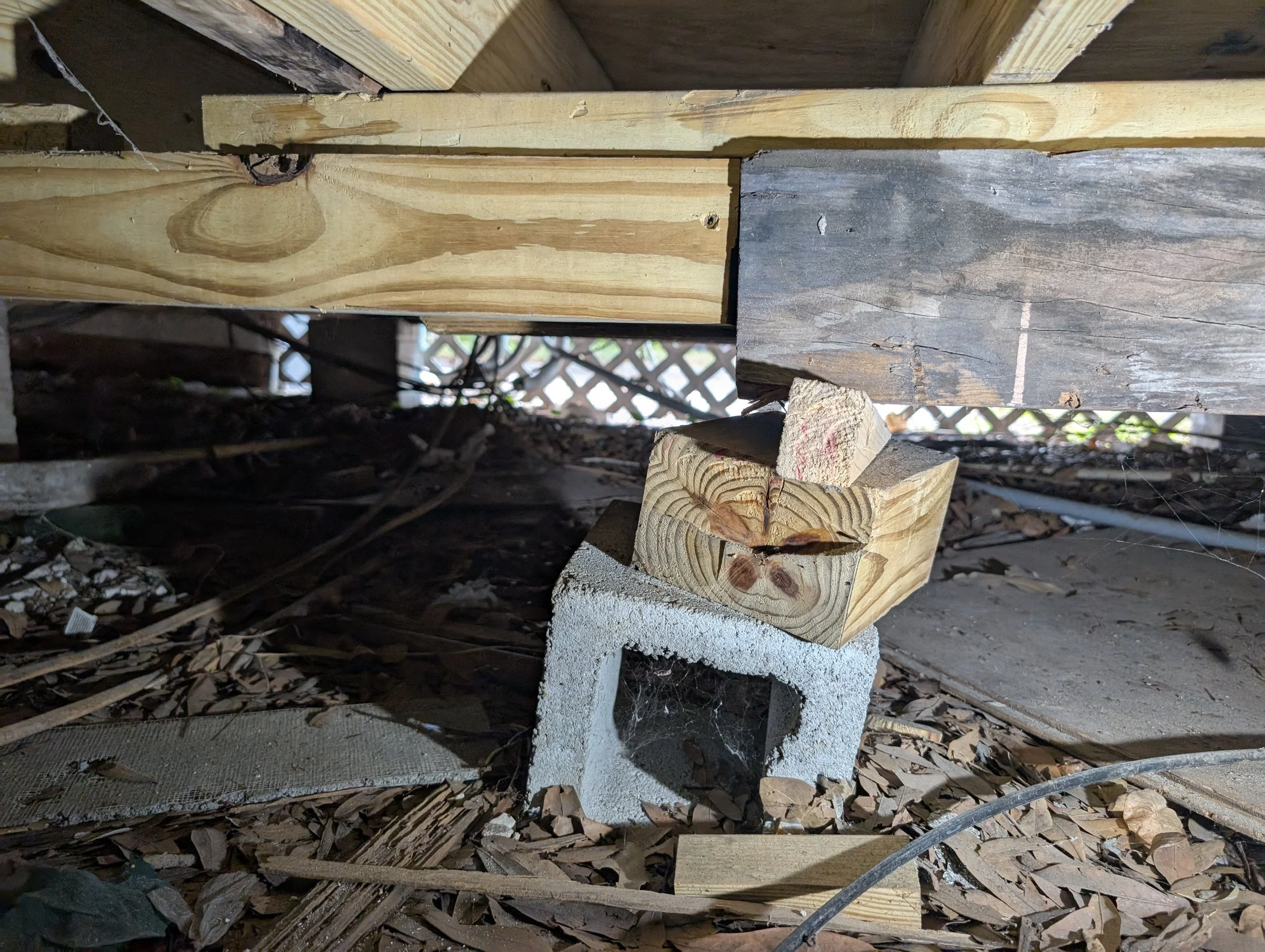
Every home settles to some degree over time. Minor, uniform settling is a normal part of a structure's life cycle. But when settling becomes uneven or progressive, it can signal serious structural problems — many of which originate in the crawlspace beneath your home.
Knowing the difference between normal settling and structural settlement can help you act before minor issues become major repairs.
Warning Signs of Structural Settlement
Sloping or Uneven Floors
One of the most visible signs of settlement is a floor that slopes noticeably toward one side of a room or dips in the center. This occurs when support posts, beams, or joists beneath the floor have shifted or failed.
Sticking Doors and Windows
When a home settles unevenly, the door and window frames rack out of square. Doors that previously opened and closed smoothly begin to stick, drag, or fail to latch. Windows may become difficult to open or develop gaps at the corners.
Cracks in Walls and Ceilings
Diagonal cracks running from the corners of door and window frames are a classic sign of differential settlement. Horizontal cracks in walls and stair-step cracks in brick or block exteriors also indicate movement in the structure.
Gaps Between Walls and Ceilings
Separation between the wall and ceiling — or between the wall and floor — indicates that sections of the home have moved relative to each other.
Bouncy or Soft Floors
Floors that flex, bounce, or feel soft underfoot suggest that the structural support system beneath has weakened or shifted.
Normal Settling vs. Structural Settlement
Normal settling occurs gradually and uniformly over the first few years of a home's life as the structure adjusts to its load. It typically produces minor cosmetic issues — small hairline cracks in drywall, for example — that do not worsen over time.
Structural settlement is progressive, uneven, and worsening. If cracks are growing, floors are sloping more noticeably, or doors that used to work are now stuck, the settlement is structural and requires professional evaluation.
Frequently Asked Questions
How do I know if my home's settling is serious?
If symptoms are worsening over time — cracks growing, floors sloping more, more doors sticking — the settling is likely structural. Schedule a professional inspection.
Can crawlspace repairs fix settlement issues?
Yes, in many cases. When settlement is caused by failing support posts, beams, or joists in the crawlspace, repairing those components restores stability and can halt further movement.
How long has my home been settling?
Settlement is often gradual and goes unnoticed for years. A crawlspace inspection can identify how long damage has been progressing based on the condition of structural components.
Related Articles
- Foundation Settlement vs Crawlspace Problems
- Uneven Floors and Settlement
- Why Doors Suddenly Stick
- Cracks Around Doors and Windows
---
Schedule Your Free Crawlspace Inspection
Florida Crawlspace Repair | A Division of Laielli Construction
[850-375-4285]
[tyler@laielliconstruction.com]
*Financing available — ask us for details.*